Robert Flack’s Killing Me Softly is one of the best-loved songs of the late ’70s. It possesses a special kind of tenderness and vulnerability that transcends generations and cultures, and it remains her biggest—if not only—international hit.
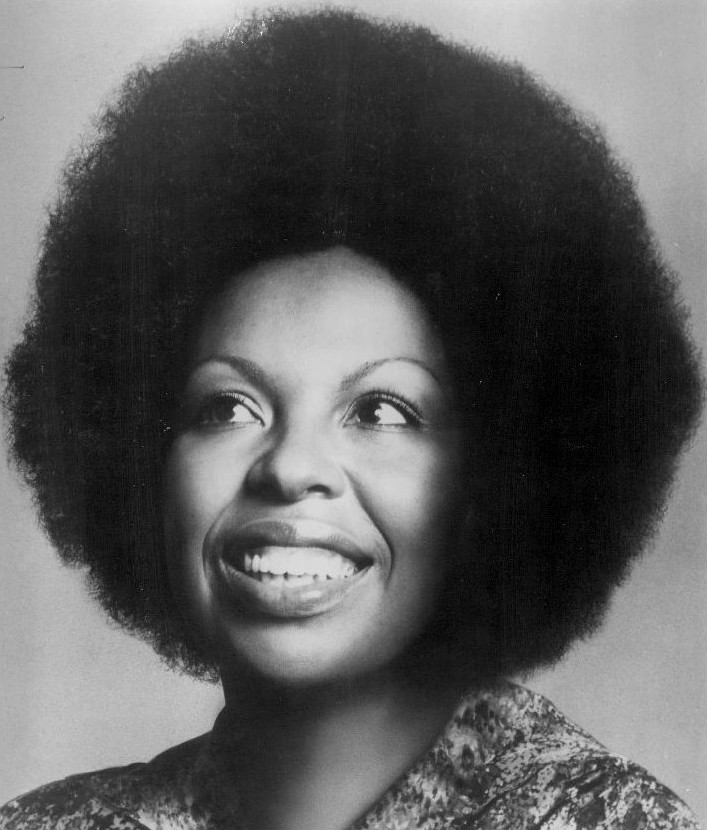
It is unusual in that, rather than adhering to the typical conventions of a ballad—which often revolve around the joys and pains of love—Killing Me Softly creates a mise en abyme of the songwriting process, projecting the singer out of her “role” and into that of a mere listener.
The song, written by Norman Gimbel and Lori Lieberman, was allegedly inspired by Lieberman’s attending an early concert of Don McLean, who would go on to become an acclaimed songwriter with timeless classics such as” American Pie”.
In this context, the singer (let’s call her Roberta for the sake of convenience) heard about this “young boy” who was making a name for himself and, perhaps out of professional curiosity—or even a mild sense of jealousy or competition—became intrigued enough to check him out for herself.
The first verse has a distant, almost cold feel, with “I heard he had…” repeated twice and resolved with “…and so I came to see him,” expressing that only after hearing so much about him does she make the effort to go. She intends to stay “for a while” and form her own opinion about this new kid in town.
Yet the very last lines of the verse convey a sense of shock or fascination, as if this unknown young boy has immediately transfixed the more experienced Roberta, who is eight years his senior (although Lierbman was actually younger than McLean – the “experienced songwriter” perspective might have been brought in by Gimbel, who was 18 years older than McLean.)
Unusually, the song actually starts with the chorus, although in a choir-like format (this was not the case in the very first recorded version of the song, by Lori Lieberman). While this might appear to spoil the revelation that comes at the end of the first verse, it instead creates the sense that the singer is still so impressed by her experience that she remains in a kind of reverie, unable to fully control her emotions.
She memorably brings together words that evoke both the material reality of playing and singing and the more abstract, existential resonance that music can have as a way of expressing one’s innermost emotions.
As the young boy strums his guitar, he “strums” Roberta’s pain—perhaps reminding her of the worries and heartbreaks she left behind when she went to the gig. His virtuosity and precocious artistic maturity give him the almost magical ability to “tell or sing her whole life” with his words.
The oxymoron Killing Me Softly, which gives the song its title, powerfully encapsulates the paradoxical attraction we have for art that makes us relive our most painful experiences or externalize our most deeply buried sorrows. The genius of this “young boy” appears to be that, although he is a complete “stranger” in her eyes, he manages to strike a deep chord in her soul, making her feel naked and fully exposed—perhaps even more so than when she sings her own songs.
The second verse explores this notion as the singer’s embarrassment and emotions become physically manifested. She is “flushed” not only because she feels as though her secrets are being revealed, but also because the intensity of the aesthetic experience creates a kind of “fever.”
She senses that the young boy is addressing her directly, while the crowd in attendance assumes an uncomfortable, voyeuristic presence. Roberta concretizes this feeling by mentioning her “letters,” which we may assume are deeply personal. We understand of course that the young boy never broke into her apartment, but the clarity and intensity of his lyrics make her feel as if he reads her like an open book.
And yet, in the third verse, the singer confesses that the experience was also humbling. The young boy, who seemed so acutely attuned to her private torments, doesn’t even notice her—he “looks right through her” as if she “wasn’t there.” The irony of rhyming “all my dark despair” with “as if I wasn’t there” underscores just how sobering, if not humiliating, the moment is.
Roberta is put in her place, so to speak: she is not special, and there is no hidden connection between her and the boy, who continues to sing “clear and strong,” with perhaps a hint of cruelty, as Roberta’s confusion and pain remain unacknowledged. She realizes that the sorrows she believed were uniquely her own can, in fact, become material for someone else’s songwriting.
Yet beyond this humbling realization, the song ultimately conveys something deeper: the profoundly human power of art to make the personal universal. It is when an artist is at their most intimate that they can reach us most powerfully, offering words to express the turmoil and chaos that so often define our inner lives.This “young boy” that Roberta encounters is both a mirror reflecting her own songwriting and an incarnation of the universal power that authentic, deeply felt art has on all of us. For all these reasons, Killing Me Softly is a masterpiece and a testament to Roberta Flack’s immense talent. May she rest in peace.
 The Lyrics Doctor
Leave a comment